Dramatic History of Europe and the Emergence of the European Union
Brief History of the European Union
Women Rights In Turkey
In its less visible, more subtle forms, gender-based violence threatens the physical and emotional integrity of millions of women living in Turkey, and billions globally
TURKISH - CHINESE RELATIONS SINCE 1971 AND THE EAST TURKISTAN ISSUE
Turkish and Chinese people have historical relations since the periods of the Hun Empire and Göktürks. These relationships are driven, sometimes friendly and sometimes went to war in the history
Showing posts with label energy. Show all posts
Saturday, June 24, 2017
'China's Energy Demand as A Factor in Shaping the Priorities of Kazakhstan's Foreign Policy' [PDF]
8:40 PM
Central Asia, China, energy, energy security, energy supply, foreign policy analysis, geoeconomics, isa burak gonca, Kazakhstan, obor, sreb
After gaining independence in 1991, energy resources management has been the most important factor in both economic development strategy and shaping priorities of Kazakhstan’s foreign policy. Whereas the People's Republic of China has achieved stable economic growth momentum as a result of the economic arrangements made by Deng Xiaoping, and opening- up through accession to the WTO in 2001, the country has started to become an energy importer. Therefore, energy security has become more important for China. The large demand for energy in China is engaged in new foreign policy parameters. For this reason, China has led to establish a close dialogue with many energy supplier countries. Kazakhstan comes first among these countries because it is one of the neighboring countries of China and Kazakhstan is a partner of China on various platforms including Shanghai Cooperation Organization. In this study, firstly the relationship between foreign policy and energy resources are discussed. In addition to this, the place of energy in the Foreign Policy Concept for 2014 – 2020 of Republic of Kazakhstan is analyzed. Then the energy potential in Kazakhstan and the influence of China's energy demand in the Kazakhstan’s foreign policy are analyzed.
Just click on the link for downloading my article on China's Energy Demand as A Factor in Shaping the Priorities of Kazakhstan's Foreign Policy in the Journal of Eurasian Studies >http://dergipark.gov.tr/download/article-file/296875
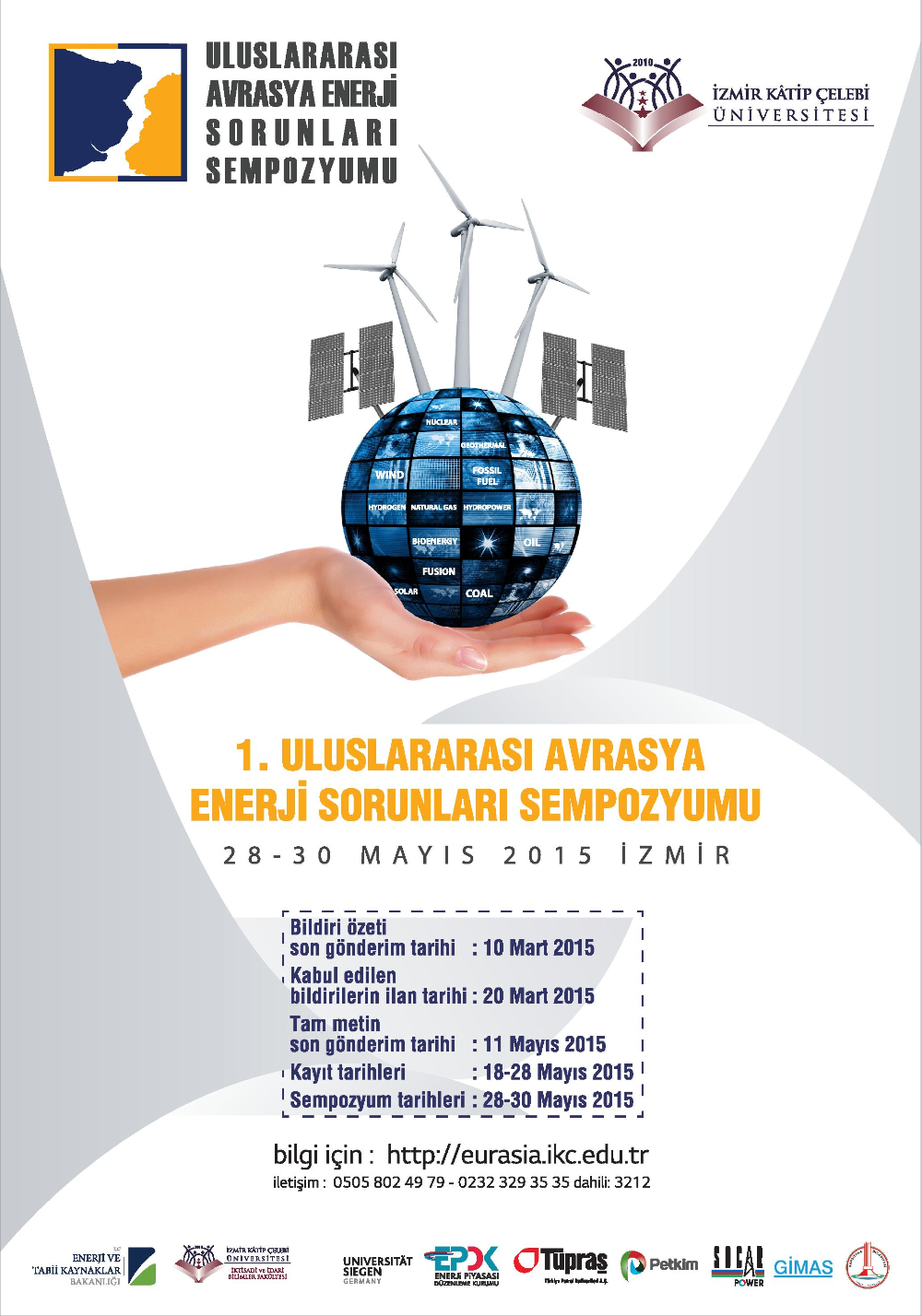
International Symposium on Eurasia Energy Issues Full Paper [PDF]
7:18 PM
energy, energy routes, energy security, energy supply, Eurasia Energy Issues, full paper, ikc, isa burak gonca, symposium
First International Symposium on Eurasia Energy Issues was organized by Izmir Katip Çelebi University.
You may find my paper & other papers presented in the Symposium at http://ykb.ikc.edu.tr/UserFiles/1/fatih.tekin/1c78fe76-b9ef-4a1c-961b-7e15b80359bf.pdf
'A New Geopolitical Game In Mediterranean Hydrocarbons: Windows of Opportunities or New Challenges?' [PDF]
5:32 PM
eastern Mediterranean, energy, energy routes, energy security, IR, İsa Burak Gonca, mediterranean hydrocarbons, Mesut Hakkı Caşın
![]() |
| Prof. Dr. Mesut Hakkı CAŞIN & İsa Burak GONCA |
Prof. Dr. Mesut Hakkı CAŞIN is my MA thesis adviser from the Yeditepe University of Istanbul. I learned a lot from him and I am always proud of being his student.
By cliking on the link, you can reach his article about 'A New Geopolitical Game In Mediterranean Hydrocarbons: Windows of Opportunities or New Challenges?'
Friday, November 13, 2015
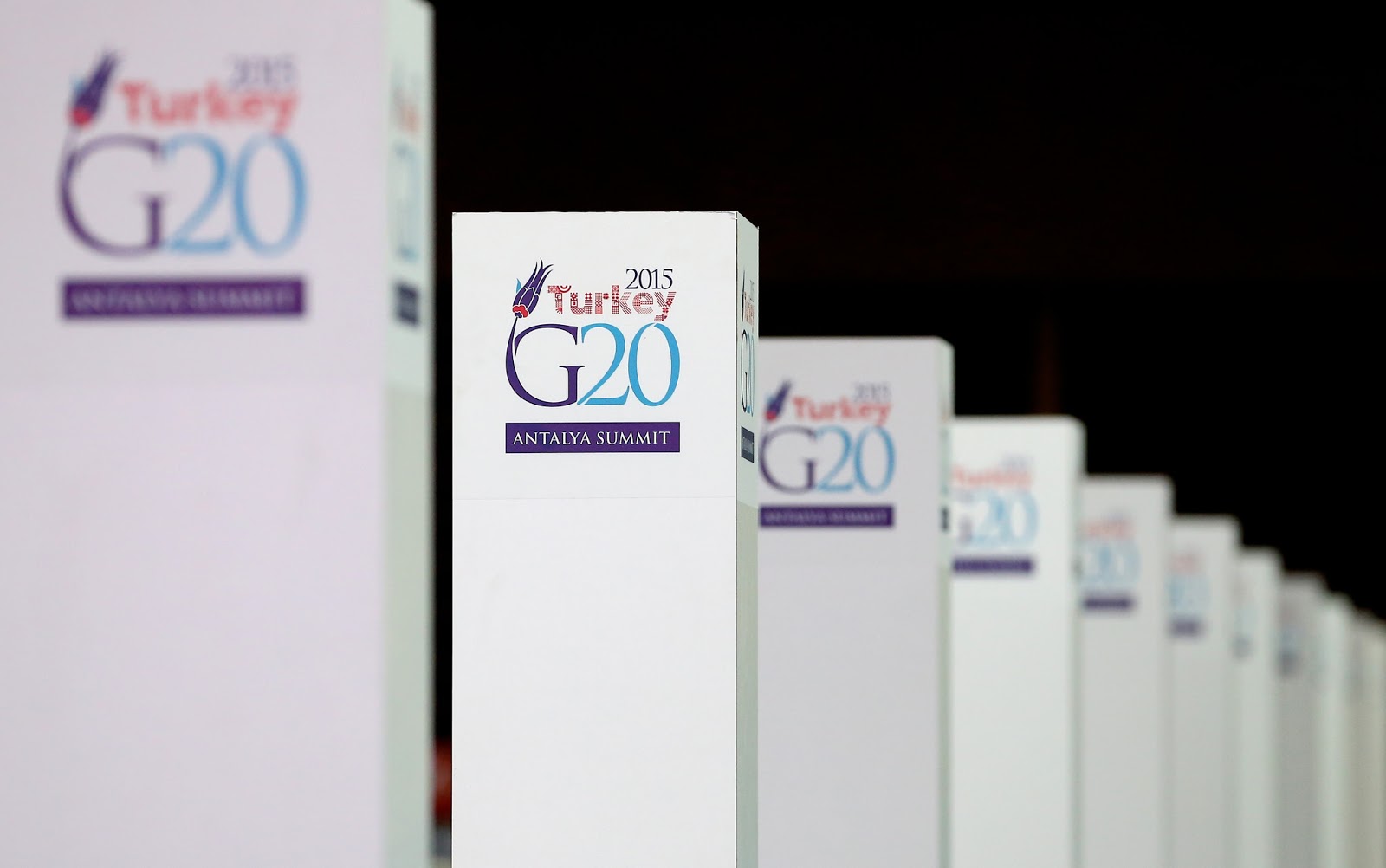
At the G20 Antalya Summit will geopolitics overshadow economic issues?
11:16 PM
20 major economies, Antalya, climate change, energy, G20, G20 2015, G20 Antalya, G20 Antalya Summit, G20 summit, G20 Turkey, G20 Turkey 2015, geoeconomics, Geopolitics, Group of Twenty, refugee crisis, Turkey
2015 G20 leaders' summit will be held in Antalya, Turkey.
The summit will be held in Antalya on November 15-16, 2015. Global economy, strengthened growth and job creation will be taken up at the summit in Turkey. The 2015 G-20 Turkey summit will be the tenth meeting of the G-20 heads of government.
The G20 Leaders’ Summit, hosted by President Recep Tayyip Erdoğan, will be held in Antalya on 15 – 16 November.
Azerbaijan, Spain, Malaysia, Senegal, Singapore and Zimbabwe will also participate in the Antalya Summit together with the G20 members.
Approximately 13 thousand guests—of which 2,469 are media members—will participate in the two-day summit.
More than 70 meetings, including the ones at a ministerial level, have been held under the Turkish Presidency since 1 December.
The three main themes of this year’s G20 Summit were chosen as “inclusiveness, investment and implementation” based on the Turkish Presidency’s priorities. Within this framework, strengthening the global economy and making it more inclusive, deepening the dialogue and cooperation between G20 countries and Low Income Developing Countries (LIDCs), sustainable development, increasing investments, and implementation and follow-up on G20 commitments will be the main topics discussed in the Summit this year.
The Summit will commence with President Recep Tayyip Erdoğan’s welcoming ceremony of the G20 Leaders on 15 November and will continue with a working lunch in which the topics of development and climate change will be discussed. During the Summit, apart from the sessions that will gather leaders, the “Women-20” engagement group formed during the Turkish G20 Presidency will be represented.
Following the reception that Prime Minister Ahmet Davutoğlu will host in honour of the Leaders and Spouses, there will be a working dinner hosted by President Erdoğan on the topic of “Global Challenges: Terrorism and the Refugee Crisis”.
On the second day of the Summit, financial regulations, the international tax agenda, anti-corruption actions and IMF reforms will be evaluated in the “Increasing Resilience” session. After this, during a working lunch, trade and energy issues will be discussed and the Antalya Action Plan will be adopted.
The Summit will conclude with a presentation given by the Chinese President, who will assume the 2016 G20 Presidency.
Finally, the results of the Antalya Summit will be announced globally with a press conference by the Turkish President.
Both G20 and BRICS Summits will be held in Antalya in Turkey in November 2015.
Turkey tightens security for upcoming G20 Antalya Summit
What is G20?
The Group of Twenty (also known as the G-20 or G20) is an international forum for the governments and central bank governors from 20 major economies. The members, shown highlighted on the map at right, include 19 individual countries: Argentina, Australia, Brazil, Canada, China, France, Germany, India, Indonesia, Italy, Japan, Mexico, Russia, Saudi Arabia, South Africa, South Korea, Turkey, the United Kingdom and the United States—along with the European Union (EU).
The G-20 was founded in 1999 with the aim of studying, reviewing, and promoting high-level discussion of policy issues pertaining to the promotion of international financial stability. It seeks to address issues that go beyond the responsibilities of any one organization. Collectively, the G-20 economies account for around 85% of the gross world product (GWP), 80% of world trade (or, if excluding EU intra-trade, 75%), and two-thirds of the world population. The G-20 heads of government or heads of state have periodically conferred at summits since their initial meeting in 2008.
Especially on behalf of Antalya area, we would like to take the opportunity of expressing our gratitude to Foreign Affairs Minister of Turkey Mr. Mevlut Cavusoglu (born in Antalya) for this event, and also more.
For more info:
Thursday, December 29, 2011
The South Stream Project and the European Union's Energy Supply Security
6:13 PM
energy, energy security, energy supply, european energy policy, Igor Sechin, Nabucco project, Russia, South Stream Pipeline, Taner Yildiz, Trans-Anatolia Natural Gas Pipeline, Turkey, Vladimir Putin
After the project of Trans-Anatolia Natural Gas Pipeline (TANAP) was signed between Turkey and Azerbaijan, the South Stream project was signed between Turkey and Russia, yesterday. Russia reaches Southstream agreement with Turkey. Russia has said it has reached an agreement with Ankara permitting Moscow to bed down the Southstream natural gas pipeline to Europe via Turkish territorial waters. The agreement of the construction of South Stream was signed with the participation of Energy and Natural Resources Minister of Turkey, Taner Yildiz, Russian Deputy Prime Minister Igor Sechin and Russian Prime Minister Vladimir Putin. This seems like the second giant step for Turkey in energy, but it can create some problems in the future for Turkey and Europe.
In South Stream project, Russia's overall objective seems like a strategy to bypass Ukraine’s gas transit system. However, Russia's other aim may be bypassing the Nabucco project through South Stream Pipeline?
Nabucco is planned to carry gas from the Caucasus and Central Asia to the European Union aimed at reducing dependence on Russian gas. Some countries in Europe were not pleasant after the South Stream agreement between Turkey and Russia.
Turkey argues that the two natural gas pipeline would be complementary to each other.
According to the Financial Times, about 15 billion Euros in the future of Nabucco natural gas not provided sufficient to justify the investment because of doubts about the uncertain situation.
İsa Burak GONCA
Tuesday, December 1, 2009
Nabucco or South Stream?
10:07 PM
energy, energy routes, energy security, energy supply, european energy policy, Nabucco, pipeline, South Stream
"The Eastern European gas crisis last January clearly indicated that the year 2009 will be full of big geopolitical debates and decisions in the energy politics for Europe. These expectations were completely fulfilled. Consortiums, big powers, but also small states have not been so active in energy issues for years. European Union surprisingly managed to revive its main energy project – the Nabucco pipeline – which was broadly considered dead."
This is a good article that shows a political drama unfolds by Matus Samel from The Global Politics Magazine.
Subscribe to:

Posts (Atom)