Women Rights In Turkey

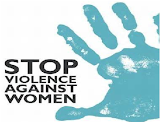
In its less visible, more subtle forms, gender-based violence threatens the physical and emotional integrity of millions of women living in Turkey, and billions globally

TURKISH - CHINESE RELATIONS SINCE 1971 AND THE EAST TURKISTAN ISSUE

Turkish and Chinese people have historical relations since the periods of the Hun Empire and Göktürks. These relationships are driven, sometimes friendly and sometimes went to war in the history

Showing posts with label POLITICS. Show all posts

Tuesday, December 20, 2011

North Korean leader Kim Jong-il dead


Chosun Central News Agency (KCNA) reported on the morning of the 19th that North Korean Leader Kim Jong Il died on his private train due to overwork on the 17th at 8:30 a.m.

In a short dispatch, KCA stated, "Chariman Kim passed away in the train on December 17th, 2011 at 8:30am due to physical overwork."

He took the helm of the communist state upon the death of his father and national founder Kim Il-sung in 1994. His successor, Kim Jong-il has announced that 20 year-old son, Kim Jong Un.

According to press in South Korea, North Korea test-fires missile after Kim Jong-il had died. South Korea's Yonhap news agency claimed, a military official made ​​a statement that the missile test is linked to the death of Kim Jong-il. South Korea and Japan is on the emergency situation.

After the death of North Korean leader, North Korea may behave aggressively in the short term in order to sort of show weak or not exposures. But in the long run, this aggressive attitude of North Korea will give up if the young leader of North Korea does not become the victim of his ambitions.

It’s a surprise but nothing to get alarmed about. There is probably no need to put the South Korean military on alert. Let’s see how this is digested in North Korea. There might be interesting developments in North Korea in near future.

Sunday, November 13, 2011

Why Berlusconi stepped down?


After the adoption of amendments of the financial stability law in Italy by the House of Representatives, Prime Minister Silvio Berlusconi met with President Giorgio Napolitano and submitted his resignation. Republican Senate previously approved changes to the financial stability law in Italy, was also accepted by the House of Representatives. President Napolitano accepted the resignation and expected to press the button for early elections.

Silvio Berlusconi was born on 29 September 1936. He is a conservative Italian politician and businessman who was the longest-serving post war Prime Minister of Italy, and third longest-serving since the creation of Italy, after Benito Mussolini and Giovanni Giolitti. He held this position on three separate occasions: from 1994 to 1995, from 2001 to 2006 and 2008 to 2011. He is also known by the nickname Il Cavaliere (literally, The Knight), due to the knighthood of the Order of Merit for Labour he received in 1977. He is also one of the richest men in the world.

In addition to this, after his immunity from prosecution was lifted by the Constitutional Court in October 2009, he declared:

"I am without doubt the person who's been the most persecuted in the entire history of the world and the history of man." 

"In my opinion, and not only mine, I am the best prime minister we can find today."

Moreover, Berlusconi’s relationship with media can be defined as “media control and conflict of interest”. Berlusconi's extensive control over the media has been widely criticized by Italian people. However, he has been wracked by sexual scandals such as wiretaps and accusations of corruption through the exploitation of prostitution in 2007, Prostitution scandal and divorce in 2009, Ruby Rubacuori in 2010. I do not want to talk too much about this subject, but all of these have created the infrastructure of the resignation of Berlusconi.

Despite he declared himself as the best politician in Europe, supporters of Berlusconi declined and lost the majority in parliament.
“It comes after the lower house of Italy's parliament has passed a package of austerity measures demanded by the EU and designed to restore markets' confidence in the country's economy. The austerity package includes a rise in VAT and the pension age, rising fuel prices and the sale of state assets. Members of the lower house voted 380-26 with two abstentions, after the Senate approved the measures easily on Friday. President Napolitano later signed the bill” (BBC, 2011).
The austerity package will create some social problems in long-term in Italy.. Maybe Italians will not miss Berlusconi, but Russian leader Vladimir Putin will miss him. Will South Stream pipeline to be completed on time without Berlusconi? According to some, Berlusconi may be a bad leader. They can be sent Berlusconi away from active politics. But they cannot finish the hegemony of Berlusconi in Italy. I hope Italy recover from the financial crisis without Berlusconi.


İsa Burak GONCA

Wednesday, October 5, 2011

Russia and China veto new UN sanctions against the Syrian regime


As the crackdown on pro-democracy protesters in Syria continues, Russia and China have blocked an effort by Western nations to impose new sanctions against the regime of Syrian President Bashar al-Assad.

After last-minute negotiations delayed a United Nations Security Council vote on Tuesday evening, Russia and China exercised their veto right and quashed a European-led resolution threatening Syria with sanctions.
Germany, Britain, France and Portugal sought the Security Council vote to impose "targeted measures" against the regime of President Bashar Assad for the crackdown that has killed 2,700 people since March, according to rights groups and the UN.
The proposal called for sanctions to be introduced if Assad failed to comply within 30 days with instructions to end the violence and enact reforms.
It would have been the first legally binding resolution adopted by the Security Council since Assad began his military crackdown on the protesters who have been calling for the end to Assad's regime for months.
Hoping to avoid the double veto, the European sponsors had watered down the language three times, even removing the word "sanction."
Russia's UN Ambassador Vitaly Churkin said, however, that Russia opposed because it was "based on a philosophy of confrontation" and included "an ultimatum of sanctions."
Western governments have expressed frustration with the council over its failure to adopt any resolution on Syria since pro-democracy protests began earlier this year.
Both the Russian and Chinese ambassadors maintained that their countries are concerned about the ongoing violence in Syria but did not think the Security Council resolution was the right move.

Wednesday, September 21, 2011

Greek Cypriots Start Oil Drilling In the Eastern Mediterranean


The Greek Cypriot administration is reported to have started drilling for oil in the Eastern Mediterranean.

The Israeli media say that the Israeli partnered American company Noble has started exploration on Monday.
According to the Globes website, the company Noble has started drilling for natural gas with ten days to go before the expiry of the agreement it struck with the Greek Cypriot administration.
A Greek Cypriot news agency has said that the company employees were carried by helicopter to a platform set up in the region from Limasol.
Turkey has earlier warned that if southern Cyprus were to launch drilling activities in the region, it was going to sign a continental shelf agreement with the Turkish Republic of Northern Cyprus.
TRT-World

Thursday, August 18, 2011

Merkel and Sarkozy Propose New Economic Government


Sarkozy told reporters that he and Merkel want a "true European economic government" that would consist of the heads of state and government of all eurozone nations.


The leaders of France and Germany called Tuesday for greater economic discipline and unity among European nations but declined to take immediate financial measures seen by many investors as the only way to halt the continent's spiraling debt crisis.

The Dow Jones industrial average fell, the euro slid against the dollar and key European markets edged down in off-hour trading after Chancellor Angela Merkel of Germany and French President Nicolas Sarkozy announced the results of their emergency talks in Paris.
Sarkozy called for a "new economic government" for Europe that would meet at least twice a year with European Union President Herman Van Rompuy as its head, but he offered few other details or indications that the body would have real power.
Merkel and Sarkozy also called for all eurozone nations to enact constitutional amendments requiring balanced budgets. They said they want the process completed by the summer of 2012, but it would almost certainly run into protracted political difficulties in many countries.
Both leaders said the moment was not right to replace 17 government bonds with a single one allowing weaker economies to borrow in cooperation with the powerhouse economies of France and Germany. A growing number of experts are calling for the eurobond as a way to prevent the unaffordable interest rates that have driven Greece, Ireland, and Portugal to seek bailouts from the eurozone countries and the International Monetary Fund.
New figures show slowing French and German growth, and the German government fears it would face higher borrowing costs and more risks if it had to borrow jointly with financially shaky nations.
"We have exactly the same position on euro bonds," Sarkozy said. "One day we could imagine them, but at the end of a process of European integration, not at the beginning."
The two leaders also proposed a Europe-wide tax on financial transactions and pledged to harmonize their countries' corporate taxes in a move aimed at showing the eurozone's largest members are "marching in lockstep" to protect the euro.
Sarkozy told reporters that he and Merkel want a "true European economic government" that would consist of the heads of state and government of all eurozone nations.
The move appeared a step toward the closer long-term economic integration that many analysts have said is inevitable to make the euro experiment survive, though it was unclear how much effect it would have in the short term.
"There has to be a stronger coordination of financial and economic policy" to protect the euro, Merkel said.
Reuters

Monday, August 8, 2011

S&P Downgrades US Credit Rating to AA-Plus


The United States lost its top-notch triple-A credit rating from Standard & Poor's Friday, in a dramatic reversal of fortune for the world's largest economy.


S&P cut the long-term U.S. credit rating by one notch to AA-plus on concerns about growing budget deficits.

"The downgrade reflects our opinion that the fiscal consolidation plan that Congress and the administration recently agreed to falls short of what, in our view, would be necessary to stabilize the government's medium-term debt dynamics," S&P said in a statement.

"More broadly, the downgrade reflects our view that the effectiveness, stability, and predictability of American policymaking and political institutions have weakened at a time of ongoing fiscal and economic challenges to a degree more than we envisioned when we assigned a negative outlook to the rating on April 18, 2011," the statement said.

The outlook on the new U.S. credit rating is negative, the S&P said in its statement, a sign that another downgrade is possible in the next 12 to 18 months.


Monday, August 1, 2011

Europe’s resurgent far right focuses on immigration, multiculturalism


The far right in Europe has enjoyed a renaissance over the past 30 years, driven by resentment of the growing powers of the European Union and by rejection of the “multiculturalism” that has accompanied rapid immigration from the developing world.


Political parties opposing immigration and integration have done well in elections in recent years — and beyond them, neo-fascist and “national socialist” groups have become well-established across the continent, including in Germany, Belgium, the Netherlands, Italy, Scandinavia, Hungary and the United Kingdom.
Most of those belonging to such groups would not contemplate the sort of carnage that occurred in Norway on Friday, but they would probably sympathize with what appears to have been the manifesto of the alleged assailant, Anders Behring Breivik.
Breivik claimed that “cultural Marxism” had morally degraded Europe, and purportedly wrote: “You cannot defeat Islamisation or halt/reverse the Islamic colonization of Western Europe without first removing the political doctrines manifested through multiculturalism/cultural Marxism.” Elsewhere he said: “One of the most widespread manifestations of the craziness of our world is multiculturalism.”


Monday, June 13, 2011

Four parties to form new Turkish Parliament


Four party groups will take their place in Turkey’s new Parliament as electoral officials had opened more than 90 percent of the nation’s ballot boxes by late Sunday.

The ruling Justice and Development Party, or AKP, will form a majority government after winning over 50 percent of the popular vote; the incumbents will be joined again by the opposition Republican People's Party, or CHP, the Nationalist Movement Party, or MHP, and the Peace and Democracy Parliament, or BDP, in the legislature.


A party must have at least 20 MPs in order to form a parliamentary group.

Prime Minister Recep Tayyip Erdoğan arrived at AKP headquarters and is expected to address ecstatic party supporters, who have gathered in front of the building, cheering and chanting slogans.

CHP leader Kemal Kılıçdaroğlu also went to his party's headquarters. It was reported that Kılıçdaroğlu would issue a press statement later in the evening.

Around 35 BDP-backed independent candidates have been elected to the Turkish Parliament after the party supported a number of independents to circumvent the country’s 10 percent election threshold.

Saturday, January 22, 2011

What factors affect voter turnout?

 It is obvious that there is a decline in public interest for elections in the world. There can be a lot of reasons for this, but three of them go to the fore.


Three Hypotheses on the determinants of voter turnout;
1-      Lack of provision of electoral security decreases the voter turnout.
2-      Noncompulsory voting decreases the voter turnout
3-      Disbelief in the efficiency of voting decreases the voter turnout

1-      Lack of provision of electoral security.
The 2009 presidential election in Afghanistan was characterized by lack of security, low voter turnout. The Taliban demanded that Afghans boycott the presidential elections and instead "free their invaded country" through holy war. Taliban and Mujahideen (holy fighters) threaten Afghan people. People`s life would be under the danger if they go to vote. Taliban said that "They must prevent people from attending the elections and one day before the elections all roads and highways must be totally closed to government and civilian vehicles, and they must inform people," (UNHCR, 2010).  

It is the same case for the Iraqi elections in 2004. Lack of security is keeping Iraqi political parties from doing much campaigning before the elections in 2004. With political rallies and marches almost out of the question for fear of violence, most parties are restricted to using radio, television, and newspaper ads to convince the Iraqi people to vote for them.
2-      Obligatory/compulsory vote or not
In some countries voting is not compulsory. Noncompulsory voting decreases the voter turnout. For instance, under a voluntary system, voter turnout decreased in the Netherlands since it crosses from compulsory voting to noncompulsory voting in 1970. In the last compulsory voting in Netherlands, the voter turnout is 94.95% in 1967 elections, and in the first noncompulsory voting in Netherlands, the voter turnout is 79.08% in 1971 (IDEA, 2010). 
3-      Disbelief in the efficiency of voting
Political efficiency or the feeling that an individual can influence the political process is very important for the voter turnout levels. However, in some countries there is disbelief in the efficiency of voting. Some people still suspend disbelief and lack of efficacy of a single vote will dissuade all Americans from voting.
In this research, the few country studies and the most similar systems design (MSSD) are used to explain and test three hypotheses on the determinants of voter turnout which are lack of provision of electoral security decreases the voter turnout, noncompulsory voting decreases the voter turnout, disbelief in the efficiency of voting decreases the voter turnout. 

However, there are some critical points here which are when the testing of hypotheses, there is lesser in-dept analysis and it patterns that hold across these systems enable us to generalize. 

Sunday, January 16, 2011

South Sudan: Can This Be the World's Newest Nation?


A thousand miles from anywhere, among the empty flatlands and bare rock hills that mark the Sahara's southern edge, Juba is a place of mud huts and plastic-bag roofs where buzzards lift lazily on the afternoon heat and children wash in the muddy waters of the White Nile. It has no landline telephones, no public transport, no power grid, no industry, no agriculture and precious few buildings: hotels, aid compounds and even some government ministries are built from prefab cabins and shipping containers. There are a few businesses, a few score police, a handful of schools, one run-down hospital and several hundred bureaucrats. With the arrival of ever more aid workers, there is now also the occasional traffic jam of white SUVs on Juba's five tarred roads and a small clutch of bars to soak up those expat salaries. But it hardly suggests the improbable reality now dawning on the place: barring war, famine or genocide — and all are possible — in 10 months this sweltering, malarial shantytown will become the world's newest capital city in the world's newest country, South Sudan.
 
Read Full News

Thursday, August 19, 2010

NORTHERN IRAQ: THE KURDISH QUESTION

Ottomans divided Iraq into 3 parts; Mosul, Baghdad, Basra. These 3 cities has multi-ethnic population (Sunnis, Kurds, Shia, Turkmens, and Nestorians). So there is no majority. The direct Ottoman rule was imposed and lasted until World War I; afterwards the British influence increased in the region.

1919: Paris Peace Conference: Kurdish delegation attends along with Prince Faisal (Hashimite Family) (Future king of Iraq)

GB will unify 3 provinces, create `class A` mandate of Iraq. GB proposes a Kurdish Tribal Confederation. Iraqi Kurds wanted self determination. GB and Hashimite King opposed to this.

The first revolt began on May 22, 1919 with the arrest of British officials in Sulaymaniyah and it quickly spread to Mosul and Arbil. The British employed aerial bombardments, artillery, ground combat, and on one occasion, chemical gas, in an attempt to quell the uprising. Then the British exiled Mahmoud to India. In July 1920, 62 tribal leaders of the region, called for the independence of Kurdistan under a British mandate. The objection of the British to Kurdish self-rule sprang from the fear that success of an independent Kurdish area would tempt the two Arab areas of Baghdad and Basra to follow suit, hence endangering the direct British control over all Mesopotamia. In 1922, Britain restored Shaikh Mahmoud to power, hoping that he would organize the Kurds to act as a buffer against the Turks, who had territorial claims over Mosul and Kirkuk. Shaikh Mahmoud declared a Kurdish Kingdom with himself as King, though later he agreed to limited autonomy within the new state of Iraq.

By 1927, the Barzani clan had become vocal supporters of Kurdish rights in Iraq. In 1929, the Barzani demanded the formation of a Kurdish province in northern Iraq. Emboldened by these demands, in 1931 Kurdish notables petitioned the League of Nations to set up an independent Kurdish government. Under pressure from the Iraqi government and the British, the most influential leader of the clan, Mustafa Barzani was forced into exile in Iran in 1945.
Later he moved to the Soviet Union after the collapse of the Republic of Mahabad in 1946.

in 1958, Abdul Karim Qasim returned from exile by the military coup. Kurds demanded power sharing but it is rejected by Qassim and results in Kurdish Rebellion based on demand of Kurdish as an official language.

During 1959-1960, Barzani became the head of the Kurdistan Democratic Party.
In response to the attack, Qasim lashed out and ordered the Iraqi Air Force to indiscriminately bomb Kurdish villages in 1961.

1963, Baathist coup against Qasim.

Abdul Rahman Arif came to power, the Iraqi government launched a last-ditch effort to defeat the Kurds. This campaign failed in May 1966, when Barzani forces thoroughly defeated the Iraqi Army at the Battle of Mount Handrin, near Rawanduz.
New Kurdish demands, full autonomy. 2/3 of oil revenue must spend in N.Iraq. but this is rejected. This caused another rebellion by Kurds.

Rahman Arif announced a 14-point peace program in June 1966, Barzani accepts this.
In 1966, new government established in Iraqi Kurds are offered a de-centralized administration.

1968, Baath party came to power in Iraq.

Proposals for full authonomy, Barzani demands full independence. A peace plan was announced in March 1970 and provided for broader Kurdish autonomy. The plan also gave Kurds representation in government bodies, to be implemented in four years.
Iraqi army controlls towns, Kurds control countryside. Kurds armed, supported by USA, Iran and Israel. Kurds have bases in Iran. USA wants to support Kurds to weaken Iraq government.

1970-1975: Barzani viewed as America`s man.

Support ends with Algiers Agreement in 1975. In 1974, Iraqi government began a new offensive against the Kurds and pushed them close to the border with Iran. Iraq informed Tehran that it was willing to satisfy other Iranian demands in return for an end to its aid to the Kurds. With mediation by Algerian President Houari Boumédiènne, Iran and Iraq reached a comprehensive settlement in March 1975 known as the Algiers Pact. The agreement left the Kurds helpless and Tehran cut supplies to the Kurdish movement.

After 1979, Iran Islamic Revolution, Iran forces Kurds out.

1980-1988: During the Iran–Iraq War, the Iraqi government again implemented anti-Kurdish policies and a de facto civil war broke out.

The Al-Anfal Campaign constituted a systematic genocide of the Kurdish people in Iraq. 150.000-200.000 Kurds killed with use of gas in Halabja.
Kurds are divided over problems between Kurdish Democratic Party (KDP)(BARZANI)
And Patriotic Union of Kurdistan (PUK) (TALABANI).

In 1991, Iraqi invasion of Kuwait prompts in 1991 Kurdish Rebellion: 20.000 killed, 1.5 million reffugees.

Turkey fears impact Kurdish co-operation with PKK.
Economic problems. Must close pipeline from Iraq to Turkey. Iraqi Kurds flee into Turkey. Now crisis for Turkey. UN Resolution 688: Establishment of a no fly zone, safe havens for Iraqi Kurds. In 1991, Turkish President Ozal orders air strikes on PKK followed by ground operations. 1992: 5000 troops into Northern Iraq.

Relations between the PUK and the KDP started to become dangerously strained from September 1993 after rounds of amalgamations occurred between parties. This led to internecine and intra-Kurdish conflict and warfare between 1994 and 1996. Direct United States mediation led the two parties to a formal ceasefire in Washington Agreement in September 1998.

Iraqi Kurds have played an important role in the 2nd Gulf War, “Operation Iraqi Freedom" Kurdish parties joined forces against the Iraqi government in the Operation Iraqi Freedom in Spring 2003. The Kurdish military forces known as peshmerga played a key role in the overthrow of the former Iraqi government.

PUK-leader Jalal Talabani has been elected President of the new Iraqi administration, while KDP leader Massoud Barzani is President of the Kurdistan Regional Government (KRG).

Wednesday, August 18, 2010

The Report of Inspection of the U.S. About the Republic of Turkey
The Office of Inspector General (OIG) for the U.S. Department of State and the Broadcasting Board of Governors (BBG) inspects each of the approximately 260 embassies, diplomatic posts, and international broadcasting installations throughout the world, to determine whether policy goals are being achieved and whether the interests of the United States are being represented and advanced effectively. Additionally, OIG performs specialized security inspections and audits in support of the Department's mission to provide effective protection to our personnel, facilities, and sensitive intelligence information. OIG also audits Department and BBG operations and activities to ensure that they are as effective, efficient, and economical as possible. Finally, OIG investigates instances of fraud, waste, and mismanagement that may constitute either criminal wrongdoing or violation of Department and BBG regulations.

This report is about the U.S. Embassy Ankara, Turkey.

You can reach the full report here: http://dosyalar.hurriyet.com.tr/abddisisleriraporu.pdf

Wednesday, February 10, 2010

Ukraine faces new crisis as Yanukovych claims narrow poll victory


Ukraine faced the prospect of fresh political confrontation on the streets after the result of its fiercely contested presidential election teetered on a knife edge today.

According to exit polls published immediately after voting ended Yuliya Tymoshenko, the glamorous, firebrand leader of the Orange Revolution, was narrowly beaten by Viktor Yanukovych, her bitter rival. But the margin of defeat was as little as three percentage points, paving the way for a potential challenge in the courts — and in the streets if her campaign claims widespread electoral fraud.

Two polls gave her 45.5 per cent against 48.7 per cent for Mr Yanukovych, while two others put him between four and five percentage points ahead. While all four polls gave the election to Mr Yanukovych the result was tighter than either side had predicted.

Mr Yanukovych’s campaign hailed an “absolute victory”. His political aide Anna German said: “That leaves Tymoshenko with no chance... She will get nothing in the courts.”
Ms Tymoshenko refused to concede defeat, saying that it was too early to call the result. She urged supporters to “try to protect every vote because this is what is going to determine the future of Ukraine”.
Her campaign chief, Oleksander Turchynov, added: “The result of the majority of exit polls are within the margin of statistical error. Conclusions about who the victor is can be made only on the basis of the real results of the Central Election Commission.”

Ms Tymoshenko, 49, threatened last week to lead a second Orange Revolution after accusing Mr Yanukovych of preparing massive ballot-rigging to steal the presidency. With tensions soaring, there are fears that the highly charged contest will spill over into violence on the streets after both sides accused each other of bussing in thousands of supporters for demonstrations.

Hundreds of Mr Yanukovych’s supporters were gathering outside key government buildings in Kiev last night as well as the Central Election Commission. The Interior Ministry disclosed that his Party of Regions had submitted plans to gather 50,000 people outside the election commission headquarters for a demonstration today.

The election had been billed as a verdict on the pro-Western revolution led by Ms Tymoshenko and her former Orange ally Viktor Yushchenko against Mr Yanukovych’s fraudulent, Kremlin-backed victory in 2004. History may now repeat itself if the ballot-box verdict is challenged on the streets.

Mr Yanukovych, 59, had been favourite to win the presidency since leading the first round of voting on January 17 with 35 per cent, ten percentage points more than Ms Tymoshenko. She had been seen as struggling to make up the gap on her foe, but an apparent late surge in support put her within reach.

The next few days will be critical in determining whether a clearly divided country plunges into a new bout of instability, particularly if the election count confirms the closeness of the race. The verdicts of international observers, expected later today, will also have an important impact.

Victory for Mr Yanukovych would confirm a remarkable political comeback after the humiliation of the Orange revolution. It would also tilt Ukraine back towards Russia’s sphere of influence after the relentlessly pro-European course under President Yushchenko.

For his opponents it would signal the restoration of an authoritarian cronyism that dominated post-Soviet Ukraine. Mr Yanukovych, 59, has never apologised for the ballot-rigging and insisted defiantly in a recent interview with The Times that he had been elected legitimately.

American political consultants worked hard to soften his image as a Soviet-era factory boss, but Mr Yanukovych’s leaden speaking style meant he would never compete on charisma with the sleekly persuasive Ms Tymoshenko. Instead, his campaign focused on his reputation as an effective manager who knew how to get the slumping economy moving again.

Mr Yanukovych’s power base is in Russian-speaking eastern and southern Ukraine, where heavy turnout was reported throughout the day, while Ms Tymoshenko’s greatest support is in the nationalist west.

Temperatures are running high after a battle for power that has been exceptionally vitriolic even by Ukrainian standards of political mud-slinging. Her camp accused supporters of Mr Yanukovych yesterday of killing one of her campaign workers during a confrontation at a voting station in western Ukraine.

The candidates have poured abuse on each in recent weeks, with Ms Tymoshenko repeatedly raising her opponent’s criminal past and Mr Yanukovych dismissing her as better suited to kitchen duties than running the country.

Ms Tymoshenko, the Prime Minister, presented herself as the pro-European candidate and her opponent as “defender of the interests of oligarchs and criminals”. Her campaign literature made repeated reference to the fact that Mr Yanukovych had been jailed twice in his youth after being convicted of assault and robbery, taunted taunted him for his coarse manners and apparent difficulties in speaking Ukrainian.

In return, the Russian-speaking Mr Yanukovych cheerfully made several sexist remarks as he homed in on Ms Tymoshenko’s alleged failings in dealing with the economic crisis.


From Times Online

Monday, September 14, 2009

Election fever heightens Ukraine political chaos - Hurriyet Daily News and Economic Review

`As the presidential elections nears in crisis-hit Ukraine, political chaos deepens with the power structure that emerged from the 2004 Orange Revolution is in disarray. Moscow-backed is poised for a comeback in this former Soviet republic amid an intense battle between the heroes of mass protests in 2004.

The lawmaker strode through parliament, smiling politely and clutching a chair - his contribution to a barricade designed to paralyze proceedings. Fresh from summer vacation, lawmakers last week were back to the shenanigans that have made Ukraine's parliament a source of entertainment and fodder for YouTube.`But the situation is a little different in Ukraine!


For more information about this issue, read the full story

Election fever heightens Ukraine political chaos - Hurriyet Daily News and Economic Review

Wednesday, September 9, 2009

Iran urges Turkey to set up four-way mechanism - Hurriyet Daily News and Economic Review

`As Turkey rises as a key actor in the region, Iran tries to show that it is not lagging behind its neighbor, suggesting the establishment of a four-way partnership to deal with regional issues. Turkey recently proposed a three-way strategic cooperation with Iraq and Syria in the wake of a diplomatic crisis between those two countries

Concerned about Turkey’s growing influence in the region, Iran is preparing to offer its neighbor a spot in a four-way partnership with Iraq and Syria to deal with the countries’ common problems.`

For more information about this issue, read the full article : Iran urges Turkey to set up four-way mechanism - Hurriyet Daily News and Economic Review

Greek PM pledges tighter spending before election - Hurriyet Daily News and Economic Review


There are early elections on October 4 in Greece. Greeks had started to judge Kostas Karamanlis` economic policies. The economic indicators show that Greece is going on wrong way, but public will decide who is wrong or right for Greece`s future in the next elections.

Moreover, these elections are important for solution of Cyprus issue and the air space problem over the Aegean Sea, the problems of the Turkish Minority of Western Thrace, etc.

After the election of Barack Obama as the U.S. President, the new political trend started in the world. Maybe, the more powerful winds of peace blow for Greece and Turkey and the problems come to the end with the election of new Prime Minister of Greece.


İsa Burak GONCA

If you want to know more about Greek Elections, you should visit -> Greek PM pledges tighter spending before election - Hurriyet Daily News and Economic Review

Monday, August 31, 2009

Yukio Hatoyama wastes no time in building new Japan government - Times Online


According to the last election results, Yukio Hatoyama became Japan's next Prime Minister. This is a great success, because this politician and his party, Democratic Party of Japan (DPJ) overturned the Liberal Democratic Party (LDP), which governed Japan almost without interruption for 54 years. He promised that free education, addition to minimum wage of Japan, reduction to Petrol Taxes, establishing an Asian Union as European Union, creating common monetary unit between Asian countries, etc. All of these helped Hatoyama to win elections. On the other hand, you can ask why LDP lost the elections. The answer is simple, poor governing in the economic crisis, sending Japan soldiers to Iraq and Afghanistan, blunders of PM Taro Aso, etc.

İsa Burak GONCA

For more information about this issue, you should visit the TIMESONLINE:

Yukio Hatoyama wastes no time in building new Japan government - Times Online