Canada has outperformed other major industrialised democracies through the financial crisis, recovering almost all jobs lost during the recession while its banking sector remains intact. It avoided a property crash and most economists expect 2010 growth to come in at 3%.
Dramatic History of Europe and the Emergence of the European Union
Brief History of the European Union
Women Rights In Turkey
In its less visible, more subtle forms, gender-based violence threatens the physical and emotional integrity of millions of women living in Turkey, and billions globally
TURKISH - CHINESE RELATIONS SINCE 1971 AND THE EAST TURKISTAN ISSUE
Turkish and Chinese people have historical relations since the periods of the Hun Empire and Göktürks. These relationships are driven, sometimes friendly and sometimes went to war in the history
Sunday, March 27, 2011
Canadian government collapses in no-confidence vote
Canadian opposition parties have brought down the government of Stephen Harper in a vote of no confidence, triggering an election that polls suggest will reinstate the status quo of minority rule by his Conservative party.
The opposition parties held the prime minister in contempt of parliament in a 156-145 vote for failing to disclose the full financial details of his tougher crime legislation, corporate tax cuts and plans to purchase stealth fighter jets.
Opinion polls expect Harper's Conservative party to be re-elected but not with a majority, meaning he could only continue governing dependent on opposition votes.
The opposition parties combined hold the majority of the seats in parliament with 160 while the Conservatives have 143. There is a chance the left-of-centre parties might join forces in a coalition if Harper wins another minority government on the expected election date of 2 May.
On Saturday Harper will ask the governor general, David Johnston, to call Canada's fourth election in seven years.
"The vote today, which obviously disappoints, will I suspect disappoint most Canadians," Harper said.
Harper might be gambling that an election will confound conventional wisdom and hand him the majority in parliament that has eluded him through his five years as prime minister. He is counting on the economy to help him win re-election.
Canada has outperformed other major industrialised democracies through the financial crisis, recovering almost all jobs lost during the recession while its banking sector remains intact. It avoided a property crash and most economists expect 2010 growth to come in at 3%.
"By forcing an unnecessary election in this time of fragile economic recovery, Michael Ignatieff and his coalition partners are irresponsibly and recklessly putting at risk Canadians' jobs, our economy and stable government," Harper said.
The opposition tried to form a coalition before, after Harper won minority re-election in 2008. But before he could be defeated in a no confidence vote Harper shut down parliament for three months and successfully whipped up public opposition against the coalition. The Conservatives accused the Liberals of treason for uniting with the Bloc Quebecois, a party that seeks independence for Canada's French-speaking province of Quebec.
Friday, March 25, 2011
Libya: Nato to control no-fly zone after France gives way to Turkey
4:03 PM
Nato to control no-fly zone after France gives way to Turkey, NATO-Turkey, Turkish leadership on Libya
Western allies and Turkey have secured a deal to put the entire military campaign against Muammar Gaddafi under Nato command by next week, UK and French sources have told the Guardian.
The US, Britain, France and Turkey agreed to put the three-pronged offensive – a no-fly zone, an arms embargo, and air strikes – under a Nato command umbrella, in a climbdown by France that accommodates strong Turkish complaints about the scope and control of the campaign.
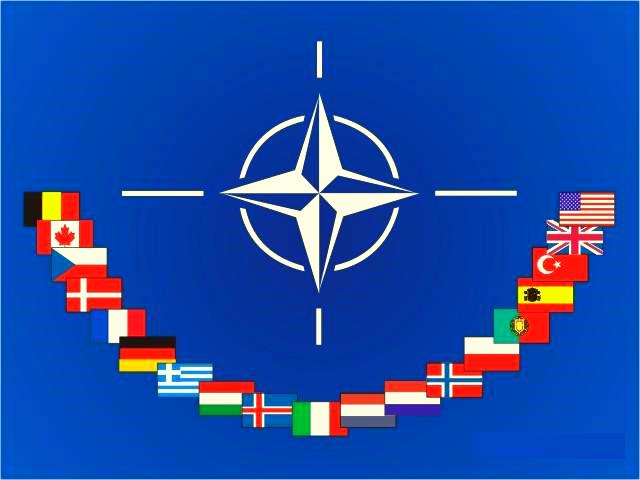
The deal appeared to end days of infighting among western allies, but needed to be blessed by all 28 Nato member states. At the end of a four-day meeting of Nato ambassadors in Brussels, Anders Fogh Rasmussen, the secretary general, said Nato had agreed to take command of the no-fly zone from the Americans. Disputes have raged at Nato HQ every day this week. Rasmussen contradicted leading western officials by announcing that Nato's authority was limited to commanding the no-fly zone, but he signalled there was more negotiation to come.
"At this moment, there will still be a coalition operation and a Nato operation," he said. This meant Nato would command the no-fly zone and police the arms embargo. But on the most contentious part, air strikes and ground attacks against Gaddafi, consensus remained elusive.
The agreement emerged from phone calls between William Hague, the foreign secretary, Alain Juppé, the French foreign minister, Hillary Clinton, the US secretary of state, and Ahmet Davutoglu, the Turkish foreign minister, following rancorous attacks from the Turkish leadership on French ambitions to lead the anti-Gaddafi war effort.
Wednesday, March 23, 2011
NATO TO IMPLEMENT UN ARMS EMBARGO ON LIBYA
10:56 AM
arms embargo on Libya, Gaddafi, NATO, the no-fly zone, United Nations, use of force in Libya
NATO has now decided to launch an operation to enforce the arms embargo against Libya. All Allies are committed to meet their responsibilities under the United Nations resolution to stop the intolerable violence against Libyan civilians.
Our top operational commander, Admiral Stavridis, is activating NATO ships and aircraft in the Central Mediterranean. They will conduct operations to monitor, report and, if needed, interdict vessels suspected of carrying illegal arms or mercenaries. This will be done in close coordination with commercial shipping and regional organisations. And we will welcome contributions from NATO partners to our common endeavour.
At the same time, NATO has completed plans to help enforce the no-fly zone -- to bring our contribution, if needed, in a clearly defined manner, to the broad international effort to protect the people of Libya from the violence of the Gaddafi regime.
(NATO)
Friday, March 18, 2011
The Security Council effectively authorized the use of force in Libya to protect civilians from attack
Security Council authorizes ‘all necessary measures’ to protect civilians in Libya. The Security Council today effectively authorized the use of force in Libya to protect civilians from attack, specifically in the eastern city of Benghazi, which Colonel Muammar Al-Qadhafi has reportedly said he will storm tonight to end a revolt against his regime.
Acting under Chapter VII of the UN Charter, which provides for the use of force if needed, the Council adopted a resolution by 10 votes to zero, with five abstentions, including those of veto-wielding China and Russia, authorizing Member States “to take all necessary measures… to protect civilians and civilian populated areas under threat of attack in the Libyan Arab Jamhariya, including Benghazi, while excluding an occupation force.”
Mr. Ban, who is currently visiting Guatemala, is keeping in close touch with “the critical discussions” under way in the Security Council over measures aimed at protecting civilians, and last night spoke by phone with Libyan Foreign Minister Musa Kusa.
The special envoy whom Mr. Ban sent to Tripoli, the capital, for humanitarian and political talks with Mr. Qadhafi’s Government, former Jordanian Foreign Minister Abdul Ilah Khatib, has now left the city after two days of discussions in which he conveyed “the strong calls by the international community to cease the fighting and the violence, to ensure humanitarian access and to work toward a peaceful solution of the crisis,” the statement said.
“The Special Envoy stressed the need for a firm and unambiguous commitment on the part of the Libyan government to cease hostilities immediately,” it added.
Mr. Khatib is continuing his efforts, including contacts with representatives of Libyan political groups in Benghazi, as well as with the authorities in Tripoli.
![]() |
| Muammar Gaddafi |
The 15-member body last month imposed sanctions against the Libyan authorities, placing an arms embargo on the country and freezing the assets of its leaders, while referring the violent repression of civilian demonstrators to the International Criminal Court (ICC) in The Hague, Netherlands.
ICC prosecutor Luis Moreno-Ocampo subsequently announced that he is opening an investigation into Mr. Qadhafi, some of his sons and members of his inner circle for crimes against humanity in repressing peaceful protesters in violence that has claimed hundreds or even thousands of lives, according to media reports. Mr. Ban has said Mr. Qadhafi lost his legitimacy when he declared war on his people.
(UN)Thursday, March 17, 2011
Japan's Disaster Affects Global Economy
5:46 PM
economic crisis, financial assistance, Financial Crisis, financial markets, global economy, japan economy, japan export, Japan` earthquake, tsunami, tsunami disaster affects global economy
The tsunami disaster in Japan and the nuclear crisis has put a strain on the already fragile global economy.
The disaster has rattled markets across the world, though its impact is believed will be slight and short-termed.
Japan, whose contribution to world economy has decreased by half in the last 15 years is known for its resilience enabling it to rally fast following past disasters.
Producers returned to their normal production levels 15 months after the Kobe earthquake in 1995 which left 5 thousand people dead. 4 out of every 5 stores also re-opened within a year and a half.
In other words, Japan defied guesses that the period for its economy to rally would take a decade.
Although the latest disaster in Japan has aroused concern in financial circles all around the world, there are different views regarding its impact on the global economy.
Some economists call attention to the fact that Japan is not the driving force of economic growth in Asia or in the world.
One of the world's leading importers of oil, agricultural products and raw material, Japan, with a weakened economy, may lead to reduced prices of goods.
However, different effects may also come into the fray.
It is feared the shortage of electricity in Japan will have an adverse effect on the production of steel, automobile spare parts and electronic goods.
To put it differently, production in Japan coming to a halt or dwindling is something the whole world is closely interested in.
Meanwhile, there is also the possibility of Japan bumping into difficulties in getting financial support in the re-structuring of its devastated regions.
The damage the disaster has inflicted on Japan is estimated to be more than 200 billion dollars.
Monday, March 14, 2011
Istanbul to host Leaders of Change Summit
2:33 AM
Istanbul, Leaders of Change Summit 2011
The academics, intellectuals and senior government officials attending the Leaders of Change Summit in Istanbul on Monday and Tuesday will discuss the recent wave of change in the region and Turkey’s role and position amid this transformation.
“The Leaders of Change Summit plans to transform itself into an annually organized Istanbul World Political Forum. Istanbul will be one of the major international political decision-making centers,” said Ahmet Eyüp Özgüç, the president of the Turkish Future Researches Foundation, or TUGAV, which organized the two-day summit along with Istanbul University.
Turkish Prime Minister Recep Tayyip Erdoğan will speak at the opening ceremony of the summit, which is supported by the Prime Ministry’s Promotion Fund and its Public Diplomacy Office, while President Abdullah Gül will deliver his remarks during the closing event.
Developments in international social and economic policies and the background of transformation in the region will be evaluated along with potential future scenarios during the summit’s main sessions, business councils and parallel sessions at the Istanbul Convention Center in the Harbiye area.
TUGAV President Özgüç said the topics to be covered at the summit will help decision-makers shape the future in the middle and long run, adding that the event also aims to create new strategies and evaluate cooperation possibilities.
For more information: http://www.leadersofchangesummit.org/
Subscribe to:
Posts (Atom)